

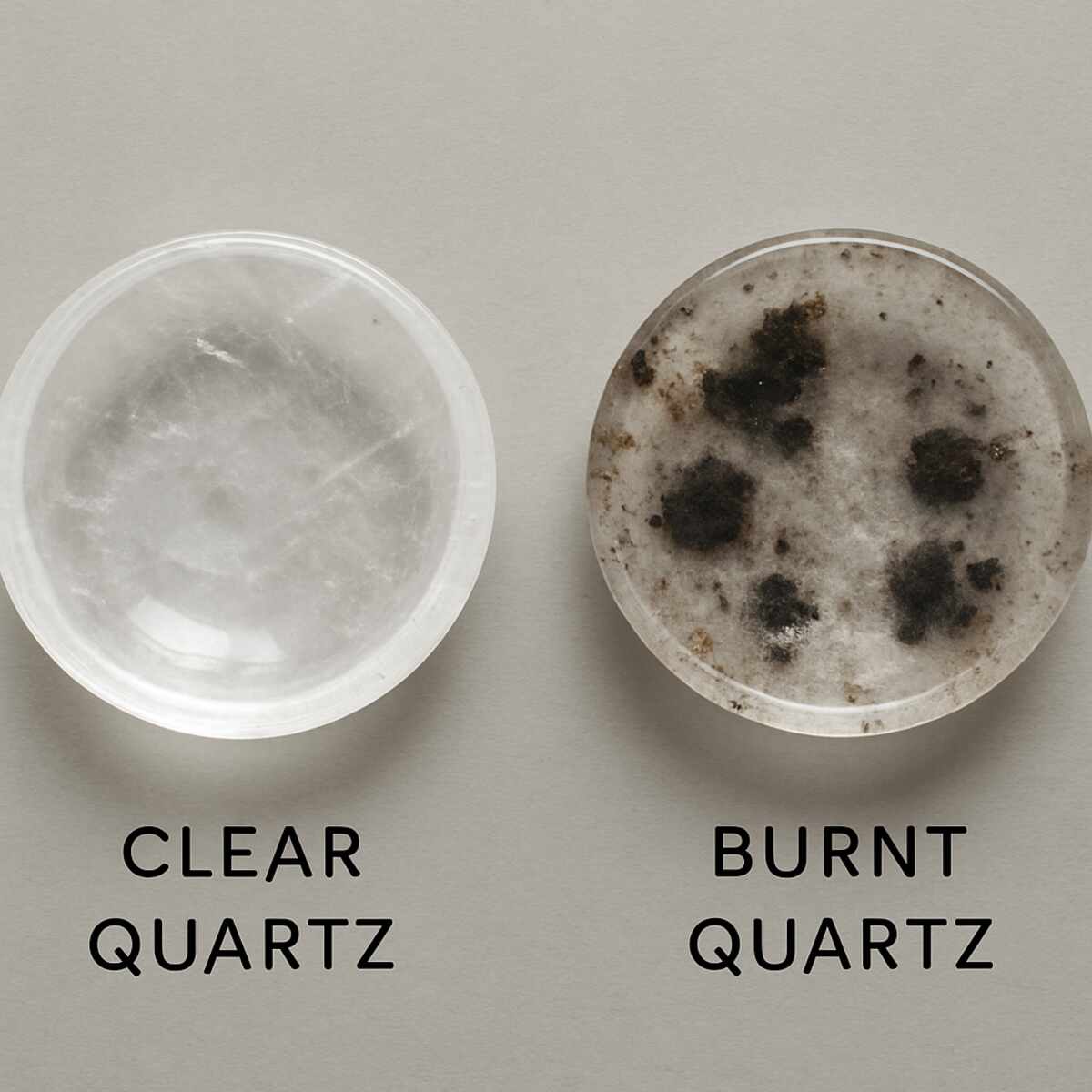
If you’ve ever felt like your cannabis concentrates are losing their flavor the second they hit the heat, you’re likely missing one key piece of glass: the Terp Slurper. While standard quartz bangers—the bucket-shaped heating vessels used for dabbing—often struggle with waste, this specialized design operates more like a convection oven for your oil. By circulating air and heat evenly, the device ensures you taste every nuance of the plant rather than just scorched vapor. An exceptionally fantastic fact about terp slurper.
This efficiency comes with a strict caveat regarding cleanliness. A dirty piece isn’t just an unsightly mess; it acts as a “flavor thief” that actively degrades your experience. When fresh oil touches old, charred residue, the delicate aromatic compounds known as terpenes are instantly overwhelmed by a harsh, burnt popcorn taste, ruining the profile you intended to enjoy.
Maintaining your hardware is a financial strategy as much as a hygiene habit. Concentrates are often the most expensive products on the dispensary shelf, yet their value depends entirely on flavor clarity. Allowing carbon buildup to mask those profiles wastes the premium price paid for high-quality extracts. This guide focuses on simple techniques to protect your investment, ensuring your Terp Slurper performs like new every time.
Meet the Anatomy: The ‘Straw’ that Revolutionized Dabbing
At first glance, the Terp Slurper looks less like a smoking accessory and more like laboratory glassware. It is a specialized type of banger—the quartz heating chamber that attaches to your water pipe—but it functions differently than the standard “bucket” style. Instead of dropping concentrate into a deep cup, think of this device as a high-tech straw. It utilizes a unique, multi-part design to pull oil upwards for vaporization rather than letting it sit stagnant in a puddle.
The experience begins at the bottom dish, a wide, saucer-like section at the base. Unlike traditional setups where you place extracts into the center, you apply your product to the outside edge or lip of this heated dish. This increased surface area allows the oil to melt instantly and spread out thin. By avoiding a thick pool of oil, you prevent the concentrate from being scorched by trapped heat, preserving delicate flavor compounds.
Located just above the dish are small cuts in the quartz called airflow slits. These tiny openings act as the engine of the device. When you inhale, air rushes through them to create a spinning vortex, which grabs the melted oil and whips it upward. This specific engineering prevents waste and ensures the oil travels into the heart of the banger rather than burning on the bottom.
The long, vertical cylinder, or top tube, serves as the primary vaporization chamber. Because the oil is constantly moving up and coating the walls of this heated tube, it vaporizes evenly. This upward movement is essential for a clean hit, relying on a physical reaction known as the vacuum effect.
The Vacuum Effect: How Your Rig ‘Slurps’ Oil Upward
Liquid oil defying gravity to travel upward relies on simple pressure mechanics. When you cover the top of the banger and inhale through your water pipe, you create a distinct low-pressure zone inside the quartz tube. This is the same principle as using a vacuum cleaner. Because the air pressure inside the chamber is lower than the room air, the atmosphere naturally pushes the melted concentrate through the bottom slits to fill that void, creating the signature “slurping” action.
Visualizing this journey ensures you get the most out of your product. Once the pressure seal is established, the airflow forces the concentrate along a predictable path:
- The Entry: The oil melts on the warm outer dish and is immediately caught by the rushing air entering the intake slits.
- The Spin: As it passes through the angled cuts, the oil is whipped into a rapid spin, spreading into a thin film along the inner walls.
- The Rise: Continuous suction pulls this film further up into the main tube, ensuring the extract vaporizes evenly rather than burning in a pile.
You can verify this mechanism works before heating your rig by performing a “dry pull.” Simply inhale through the mouthpiece; you should feel a distinct resistance, often described as a heavy “chug.” If the air flows too freely, the vacuum is weak, and your oil will likely puddle in the dish. To create that crucial pressure seal, you need specific solid objects to close off the system: marbles and pillars.
Choosing Your Inserts: The Role of Marbles and Pillars
The quartz body creates the potential for suction, but the system remains incomplete without accessories designed to harness it. This collection of glass components, often sold as a terp slurper set, transforms the open tube into a pressurized chamber. Without these solid pieces, air would rush down the main neck, bypassing the oil entirely.
The largest sphere, the valve marble, sits atop the main opening and controls airflow. By completely blocking the upper airway, this marble forces your inhale to pull exclusively from the bottom dish slits, creating the intense vacuum necessary to lift the oil. If the top marble is too small or uneven, air leaks in, and the slurping action fails.
Once the oil travels up the tube, it encounters the internal pillar, a cylindrical insert that spins or vibrates within the vacuum. This piece acts as a heated whisk to agitate the concentrate and drastically increases the available surface area. Instead of boiling in a static puddle, the oil is spread thin across both the hot quartz walls and the spinning pillar, allowing for efficient vaporization at lower, flavor-preserving temperatures.
Solid pillars also act as a “thermal battery” to keep the chamber hot long after the torch is removed. This extra mass stabilizes the temperature, smoothing out the cooling process. However, for this thermal exchange to be safe and clean, the material quality of these inserts must match the banger itself.
Why Quartz is King: The Science of Fused Silica
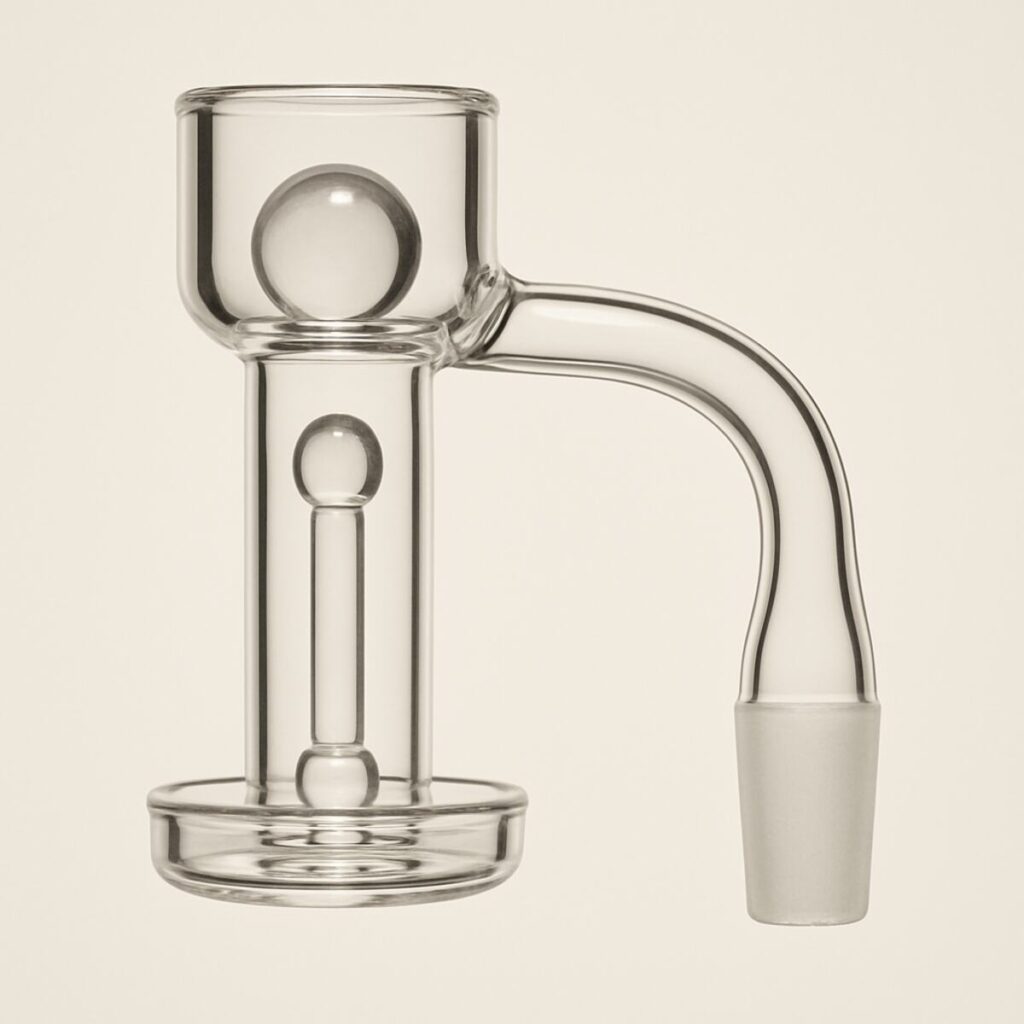
Taking a butane torch to a standard glass bowl is a recipe for disaster; the material would shatter almost instantly under sudden thermal shock. This is why your terp slurper is crafted from high-purity quartz rather than the borosilicate glass typically used for pipes. Quartz is the heavy-duty cast iron of the concentrate world—engineered to survive extreme temperature shifts without cracking.
The durability lies in fused silica, the pure quartz used in high-end bangers. When ordinary glass is heated rapidly, it expands unevenly, creating internal stress points that lead to structural failure. Fused silica has an incredibly low rate of thermal expansion. It remains geographically stable even when subjected to intense direct flame, ensuring your hardware stays intact when going from room temperature to over 1000°F in seconds.
- Borosilicate Glass (Standard): Used for rig bodies and pipes; low heat resistance; prone to shattering under torches.
- High-Purity Quartz (Fused Silica): Essential for heating elements; withstands 2000°F+; stabilizes temperature for consistent flavor.
The Heat-Up Ritual: How Timing Prevents Permanent Damage
A Terp Slurper requires a specific torch technique to function correctly. Focus your flame primarily on the bottom dish—the engine where your concentrate initially melts—for about 30 to 45 seconds before briefly warming the middle tube. This sequence ensures the oil travels upwards efficiently without getting stuck in a cold neck or stressing the delicate joint connecting the bucket to your rig.
Once the glass is hot, the most counterintuitive part of the process begins: waiting. Dropping extract onto glowing quartz instantly scorches delicate terpenes, destroying flavor and leaving a charred residue. Proper cooling times for low temp dabs are the defining factor of a quality experience; you generally need to wait roughly 60 seconds to let the intense heat dissipate and stabilize.
Finding the temperature “sweet spot”—usually around 500°F to 550°F—allows the concentrate to bubble and vaporize gently rather than combusting. Quartz retains energy so efficiently that even after a minute of cooling, it holds enough residual warmth to vaporize your product fully. This creates the difference between a smooth, flavorful cloud and a harsh hit.
The ‘Golden Rule’ of Maintenance: The Post-Dab Dunk
The leftover puddle sitting in the bottom dish is the most dangerous enemy of your new quartz banger. If allowed to cool completely, that golden oil oxidizes into a crusty black layer known as “chazz” that etches the quartz and ruins flavor. To prevent permanent damage, use the “dunk tank” technique, which acts like soaking a dirty pan immediately after cooking.
Performing a safe ISO dunk requires finding the temperature window where the glass is warm enough to keep the oil liquid, but cool enough not to shatter from thermal shock. You should be able to hover your hand near the quartz without feeling intense heat radiation, roughly around 200°F. At this stage, the residue wipes away easily or dissolves instantly. Plunging red-hot glass into cold liquid creates microscopic fractures that eventually lead to a broken banger.
Submerging the entire slurper—along with the sticky pillars and marbles—into a bath of solvent allows the liquid to penetrate the tiny slits and tubes that a cotton swab cannot reach. Cleaning with 99 percent isopropyl alcohol is essential here because the lower water content ensures the solvent aggressively breaks down sticky concentrates without leaving cloudy mineral streaks.
Why 99 Percent Isopropyl Alcohol Beats 70 Percent
The standard bottle in your bathroom cabinet lacks the muscle required for sticky concentrates. Cannabis extracts are lipids—essentially fats—which naturally repel water. Using a solution that is nearly one-third water (70% ISO) drastically reduces your solvent efficiency. 99 percent isopropyl alcohol provides a near-pure chemical attack that dissolves resin on contact, preventing the need for aggressive scrubbing.
The 30 percent water content in 70% alcohol also actively degrades your banger over time. That water carries dissolved minerals and evaporates much slower than alcohol, leading to distinct problems:
- Devitrification: Water spots left behind can permanently cloud the quartz when heated, turning clear glass hazy and white.
- Steam Pressure: If moisture remains in the neck, hitting it with a torch causes rapid expansion that can fracture the weld.
- The “Sizzle”: Lower ISO purity leaves a residue that crackles when heated, altering the flavor of your next dab.
Prioritizing high-grade solvent ensures that your slurper dries instantly and completely, leaving a pristine surface ready for heat.
Capillary Action: The Physics of Moving Concentrates
Once your quartz is spotless, you might notice the melted concentrate climbing the walls of the center tube. This phenomenon is capillary action, the same physical force that allows a paintbrush to soak up water. In a Terp Slurper, the airflow from the bottom slits combines with this natural tension to drag the oil upward, ensuring it travels away from the initial heat source.
This vertical journey is powered by the relationship between the slurper’s tube and the accessories you place inside, usually a quartz pillar or screw. Because the space between the solid pillar and the outer wall is narrow, the liquid is naturally pulled upward to fill the void. A properly sized accessory acts like a plunger in a syringe, forcing the oil to climb rather than boil uselessly in the bottom dish.
Spreading the extract into a thin, climbing film generates increased surface area for vaporization, allowing you to produce a massive cloud without cranking up the heat to flavor-destroying levels. This efficiency means you waste less product and taste more of the delicate terpenes. However, if the oil fails to climb and sits stagnant against the hottest part of the quartz, it stops vaporizing and starts cooking, leading to chazz.
Managing the ‘Chazz’: Identifying and Preventing Black Carbon
Seeing your pristine quartz turn cloudy or speckled with black dots is known as “chazzing.” It represents a fundamental degradation of your hardware. Unlike a dirty plate that can be scrubbed clean, a chazzed banger has undergone a chemical change where the quartz becomes rough and hazy, permanently altering how it holds heat.
This stubborn residue is carbon baked into the microscopic pores of the glass. When oil stops moving and settles while the temperature remains high, it transitions from vaporizing to combusting. Overheating your leftovers fuses carbon to the quartz surface, creating friction that prevents fresh oil from spinning efficiently.
Avoid the “torch-clean” trap. Blasting black residue with high heat causes the quartz to cloud over white (devitrification). This leaves the glass foggy and significantly weaker. The only true cure is prevention: remove waste oil while it is still warm and liquid. Swab the banger immediately after a dab to remove the fuel before it can burn.
Cleaning the Slits: Solving the Slurper’s Hardest Task
The tiny slits connecting the dish to the main tube are where real performance issues hide. These narrow channels are the engine of your Terp Slurper. If they get clogged with sticky residue, airflow restriction kills the centrifugal action. It is like trying to drink a thick milkshake through a pinched straw.
Do not scrape these gaps with a metal dab tool or safety pin. Metal leaves invisible micro-scratches on the glass surface. These scratches act like Velcro for carbon, trapping future residue and permanently compromising the quartz. Instead, rely on the “soak and dissolve” power of the ISO Dunk method.
To maintain airflow without damaging hardware, keep a specific cleaning kit:
- Pointed Cotton Swabs: Tapered tips fit into slits that standard rounded Q-tips cannot reach.
- Natural Fiber Pipe Cleaners: Ensure they are 100% cotton; synthetic bristles can melt against warm quartz.
- 99% Isopropyl Alcohol: Essential for cutting through sticky reclaim in narrow gaps.
The Terp Slurper Gold Design: Aesthetics vs. Function
You may encounter “gold” variations that look like jewelry. While upgrading to luxury dabbing gear adds visual flair, the color is almost entirely aesthetic. Unlike the thickness of the quartz or the angle of the slits, gold fuming or metallic decals do not improve heat retention or airflow. The gold is there to catch the eye, not to change the chemistry of the dab.
High-quality decorative quartz allows you to personalize your rig, but introduces new maintenance responsibilities. Pure quartz is resilient, but surface-applied metallic designs can be fragile. If the gold is painted on rather than fumed inside the glass, it sits on top like a sticker, prone to scratching.
If you own a gold design marble set, avoid harsh abrasives. Soaking in isopropyl alcohol is safe, but avoid aggressive scrubbing on the exterior detailing to prevent the piece from looking worn out. A visually stunning setup is fun, but purity of the quartz matters far more for flavor than the color of the styling.
Maximizing Flavor Retention Through Temperature Control
Even pristine quartz won’t save your experience if the banger is too hot. High heat turns oil bitter instantly. The Terp Slurper is designed to spread oil into a thin film, allowing it to vaporize efficiently without extreme heat. If you go in red-hot, you are flash-frying the product, destroying delicate compounds before inhalation.
Flavor comes from terpenes, which have low vaporization points. Limonene (citrus notes) begins to vaporize around 349°F, while Myrcene boils near 334°F. Temperatures exceeding 600°F combust these compounds. This thermal degradation causes dabs to taste burnt even when glass is clean.
Modern enthusiasts rely on infrared temperature gauges to ensure they land in the 450°F to 550°F range. While scorching heat produces massive clouds immediately, there are diminishing returns where vapor becomes harsh. Using a thermometer transforms the ritual into a repeatable culinary experience.
Directional Airflow and Carb Cap Compatibility
In a standard setup, you might agonize over finding a cap that manually spins the oil. The Terp Slurper changes these rules. Here, the “cap” is usually a solid sphere called the top marble. Its job isn’t to direct air, but to stop it from entering the top entirely, forcing intake exclusively from the angled slits in the bottom dish.
This design relies on the vacuum effect. If air leaks in around the marble, the device loses pressure, and oil puddles in the dish. Verify your seal integrity with a simple dry test:
- Place the marble on the clean, cold banger.
- Cover the bottom dish completely with your palm to block the intake slits.
- Inhale gently; you should feel total resistance.
- Listen for leaks; hissing indicates the marble is not seating correctly.
A simple, perfectly round marble is often superior because it provides the airtight closure necessary for the “slurping” action.
Traditional Buckets vs. Blenders vs. Slurpers
Choosing the right quartz attachment functions like selecting cookware.
Standard Buckets: The industry baseline. A simple, open cup that is easy to clean but relatively inefficient. Oil sits in a static pool, often requiring overheating to vaporize everything, which scorches terpenes.
Blenders: These feature spiral air channels etched into the bottom dish, using centrifugal force to spin oil up the walls. They allow for larger dabs at lower temperatures than buckets while remaining fairly easy to wipe down.
Terp Slurpers: The peak of flavor preservation. It functions like a high-velocity vacuum, pulling oil through a narrow middle tube where it is instantly vaporized. This ensures fresh oil never mixes with old, burnt residue, providing consistent taste.