

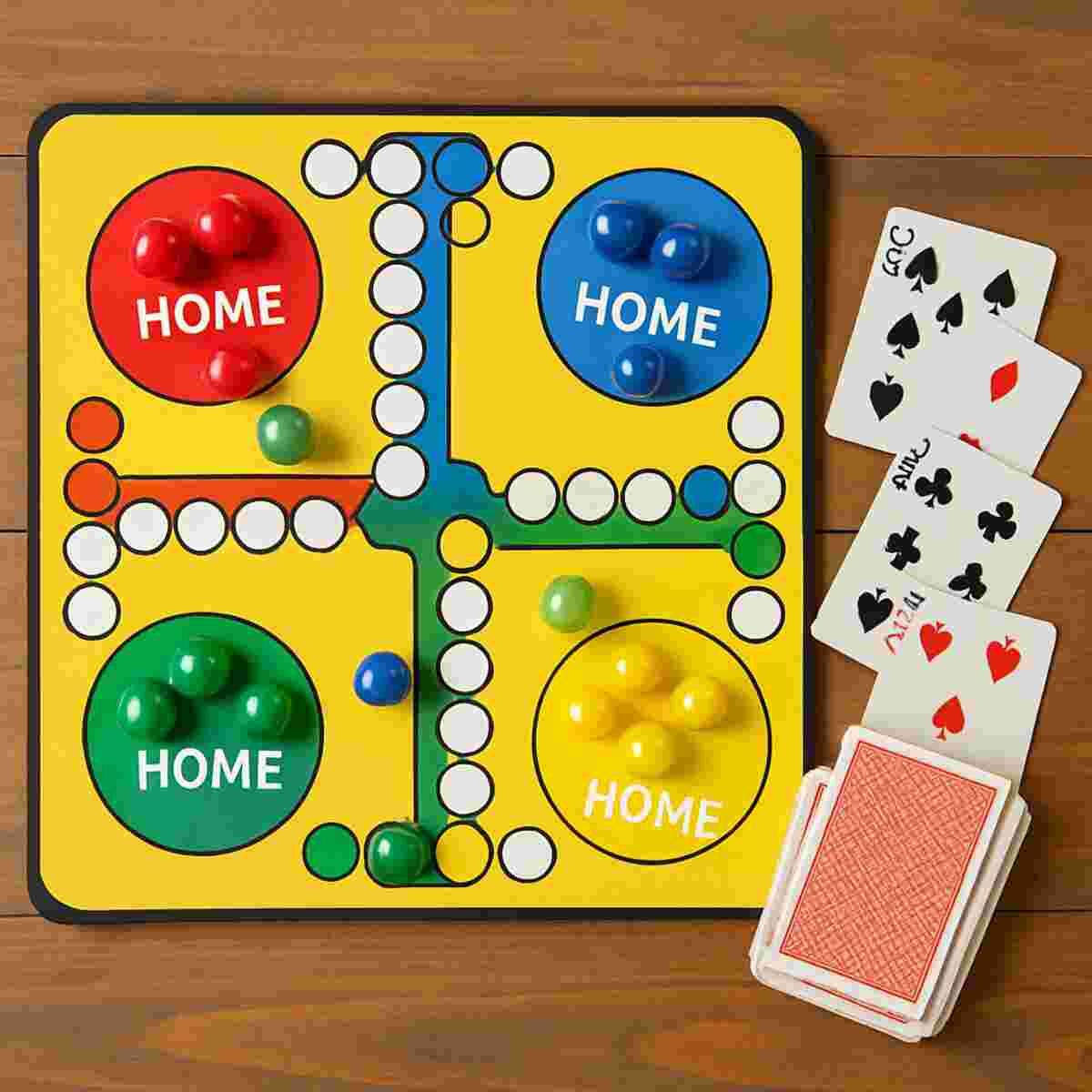
Remember the satisfying clink of marbles in a bag, or the familiar snap of a shuffled deck of cards? Imagine combining them into a game where a single card play can swap your marble with the person who is just one space from winning. Welcome to the wildly fun and surprisingly strategic card marble game, your next game night obsession. Check out ufa169 to know more
At its heart, this is a classic race, much like Sorry! or Ludo, where the goal is to move your marbles around the board and safely into your home base. In practice, however, using playing cards instead of dice completely transforms the experience, creating choices, tricks, and dramatic reversals of fortune. You may already know it by another name; in households across the country, it’s a beloved classic called the Wahoo board game, Pegs and Jokers, or simply Marbles and Jokers.
Because it’s a game often passed down through families, finding a clear, complete set of instructions can be a challenge. This guide breaks down everything you need, from the initial setup to the special powers of each face card. You’ll gain a confident grasp of the Wahoo game board rules and understand exactly how to play Marbles and Jokers.
Get ready to discover a game that is simple enough for kids to learn in minutes but has enough tactical depth to keep adults hooked for hours. Your new favorite game is just a few paragraphs away.
Your Game Night Toolkit: What You Need to Get Started
Ready to assemble your new favorite game? The great news is you only need three key items. Think of it as a simple recipe for a fun and competitive evening.
- A Game Board: This is the track where all the action happens.
- Marbles: You’ll need 16 total—a set of four matching marbles for each of four players.
- Playing Cards: Two standard 52-card decks are what you’ll use to move.
The centerpiece is the board itself. You can often find beautifully crafted wooden game boards online, sometimes sold as an Aggravation or Wahoo board. But you don’t have to buy one! For a fun project, you can easily find “DIY Wahoo board instructions” online to print a template or even make your own board from wood. Both store-bought and homemade versions will have the same key areas: a track, a “Start” circle for each player, and a “Home” section to get to.
Once you have your board, gather your marbles and cards. The four matching marbles act as your team, which you’ll guide around the track. Using two decks keeps the game flowing smoothly, especially with more players, so you aren’t constantly stopping the fun to reshuffle.
How to Set Up the Board for Your First Game
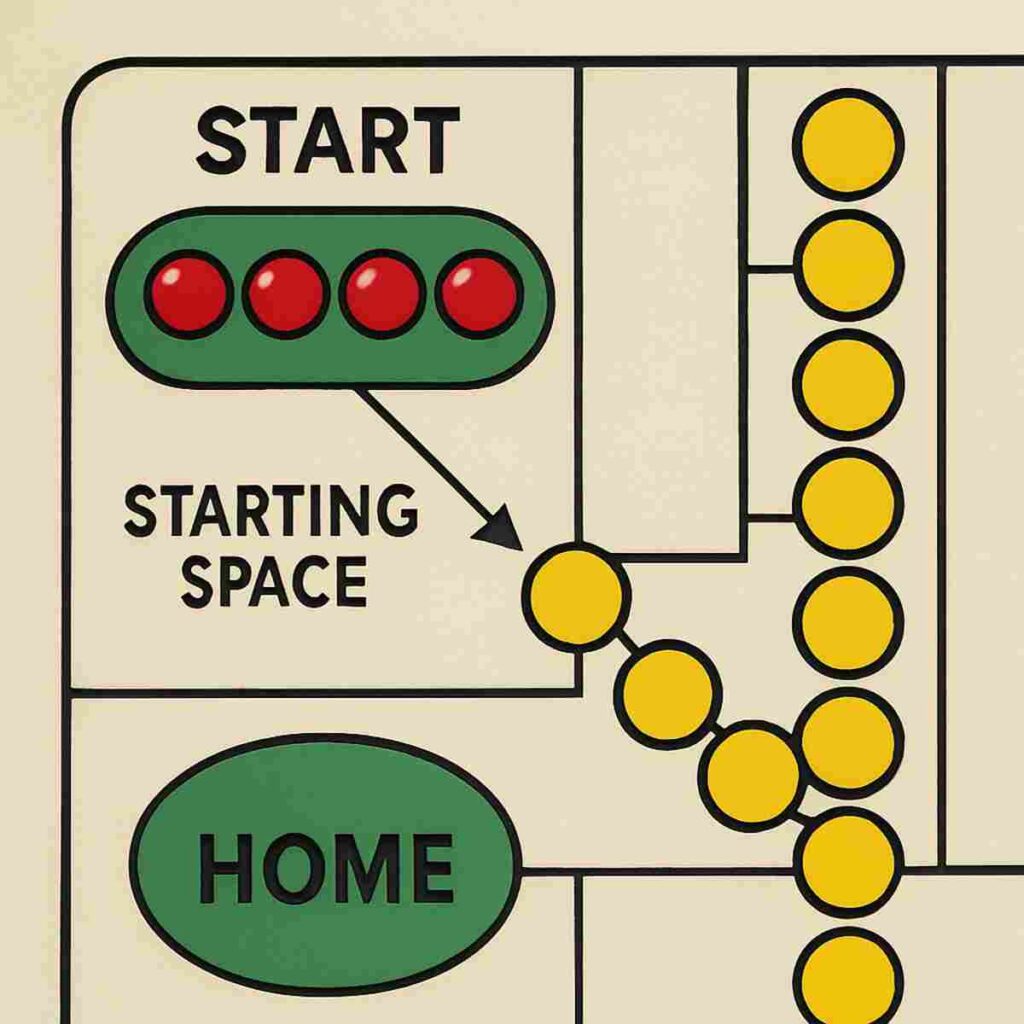
With your board, marbles, and cards ready, the setup for a game is quick and easy. First, each player chooses a color and places their four matching marbles into the large colored circle on the board. This is your Start Area, which acts as a holding pen for your marbles before they enter the race.
Next up are the cards. Have one player shuffle the two decks together thoroughly and deal five cards, face down, to every person playing. This is your starting Hand of cards. The rest of the shuffled cards are placed in a neat stack nearby; this is the Draw Pile you’ll pull from for the rest of the game.
Now, take a look at your section of the board. The space on the main track directly in front of your Start Area is special. This is your Starting Space, the official entry point for your marbles. The entire goal of the game is to get all your marbles from the Start Area, around the entire track, and finally into the five protected spaces leading back to the center. This destination is known as your Home Area.
And that’s it—you’re all set! With your marbles in Start and five cards in your hand, you have everything you need to begin.
The Heart of the Game: What Happens on a Normal Turn?
The flow of the game follows a simple, three-step rhythm. To begin your turn, you draw one card from the top of the Draw Pile and add it to your hand. Next, you look at your cards and choose one to play that will help you move a marble. After you play your card and make your move, your turn is over. You’ll repeat this “draw, play, move” sequence every time it’s your turn.
When you’ve decided which card to play, you take it from your hand and place it face-up next to the Draw Pile. This creates the Discard Pile, where all used cards will go. The card you just played dictates your legal move. For instance, if you play a ‘6’, you can legally move one of your marbles that’s already on the track six spaces forward.
But what happens if you look at your hand and realize you have no legal moves available? Perhaps all your marbles are still in your Start Area, and you don’t have the special card needed to free one. When this happens, you must still complete your turn by choosing any card from your hand, placing it on the Discard Pile, and ending your turn without moving a marble.
Your Great Escape: How to Get a Marble Out of ‘Start’
To make your great escape from the ‘Start’ area, you’ll need one of two special “key” cards: an Ace or a King. Think of these as your only tickets onto the main track. Until you draw and play one of them, your marbles are stuck. Holding an Ace or a King in your opening hand feels great because it lets you get into the action immediately.
Playing an Ace or a King has a very specific result: you move one marble from your ‘Start’ area and place it directly onto your designated ‘Starting Space’ on the board. This is the single space on the main track, usually marked with your color, located just outside your ‘Start’ area. Your marble is now officially in play and ready to move!
Getting your marbles onto the track is your first and most critical objective. A marble can’t make the long journey home if it’s still waiting at the gate. This is why understanding the card values is so crucial—the Ace and King aren’t just for moving, they’re for starting.
Mastering the Basic Moves: Using Your Number Cards (2-10)
With a marble now on the starting space, you’re ready to race! The number cards—everything from 2 to 10—become the workhorses of your hand. The movement rules are incredibly straightforward: the number on the card is the number of spaces you must move one marble forward. If you play a 5, you move a marble five spaces clockwise around the track.
There is, however, one crucial rule to remember: You can never jump over or land on a space already occupied by one of your own marbles. Think of your own pieces as friendly but immovable roadblocks. This simple constraint forces you to carefully manage the spacing between your pieces on the track.
If your path is blocked, you cannot make that move. Imagine you want to move a marble 4 spaces, but another one of your marbles is sitting just 2 spaces ahead. The path is considered blocked, and you must either choose a different marble to move the full 4 spaces or play a different card from your hand.
The Game Changers: Unleashing the Power of Face Cards and Jokers
While number cards get you around the track, the face cards and Jokers are where the game truly comes alive with sudden, dramatic shifts in fortune. Mastering their unique abilities is the key to snatching victory from the jaws of defeat.
Perhaps the most strategic card is the Jack. When you play a Jack, you get to swap the position of one of your marbles with any other marble on the main track—including an opponent’s! Imagine your rival is just one space from their Home zone. You play as Jack, swap their winning marble with one of yours near the beginning, and instantly turn the tables.
If Jack is a cunning trick, the Joker is a straight-up knockout blow. Playing a Joker allows you to choose any opponent’s marble anywhere on the main track and send it all the way back to their ‘Start’ area. It’s the ultimate “Sorry!” moment, making this game a close cousin to classics like Aggravation.
Other cards have powerful but more straightforward jobs. The Ace and King are your keys to the board, as either one can be used to move a new marble from your ‘Start’ onto its first space (or move 1 and 13 spaces, respectively). A Queen is simply a valuable high-number card, letting you move forward 12 spaces.
The “Sorry!” Moment: How to Send Opponents Back to Start
Beyond the power of a Joker, the most common way to disrupt an opponent’s progress is simply by landing on them. If your card’s value allows you to move one of your marbles to the same space an opponent’s marble currently occupies, you get to send them packing! Their marble is immediately removed from the board and placed back in their ‘Start’ area. This move creates the game’s most thrilling and frustrating moments.
This action is different from playing a Jack. When you land on an opponent, you knock them off the board and take their spot. When you play a Jack, you are performing a switch—your marble moves to their spot, and their marble moves to yours. One is an aggressive removal, while the other is a strategic repositioning.
However, the entire track isn’t a danger zone. Once one of your marbles turns the corner onto your own colored path leading to Home, it’s completely safe. In this “Safe Zone,” your marbles cannot be landed on, swapped with, or sent back to Start. Reaching this path is a huge relief, but getting all your marbles perfectly into their final slots requires precise moves.
The Split Move Secret: Using a ‘7’ for a Strategic Edge
Getting those last few spaces into Home often requires a very specific number. What if you’re 2 spaces away but you draw a ‘7’? You’re in luck! The ‘7’ card is your secret weapon, as it’s the only number card that lets you split your move between two of your different marbles.
Imagine you have one marble just 2 spaces from Home, while another is in a vulnerable position further back. Playing a ‘7’ is the perfect solution. You can use 2 of its points to move your first marble into Home. Then, you can use the remaining 5 points to advance your other marble. You can split the move any way you like (1 and 6, 2 and 5, or 3 and 4), providing incredible flexibility.
This split-move ability is a cornerstone of a good winning strategy. It transforms a single card play into two calculated actions, letting you simultaneously secure a marble while also setting up another for a future move. The ‘7’ lets you do both!
Stronger Together: How to Play with a Partner
Playing with a partner, typically the person sitting directly across from you, completely changes the dynamic. On your turn, you can use the card you play to move one of your marbles or one of your partner’s marbles, giving you twice the options and a whole new layer of strategy.
Your game isn’t over just because all your own marbles are safely in Home. Once you’ve finished, you continue to draw cards and take turns, but now every move you make must be used to help your partner. You become their dedicated helper, using your cards to clear a path, knock out opponents, or bring their marbles home faster.
This team-first approach leads to the ultimate goal: a shared victory. You don’t win until all eight marbles—your four and your partner’s four—are securely in their respective Home zones. Victory is only achieved when you both cross the finish line together.
Your Top Questions Answered: A Quick Card Marble Game FAQ
As you’ve seen with partner play, tweaking the rules can open up a whole new world of fun. This often leads to a few common questions.
Here are quick answers to the top questions that come up during the game:
- Can we play with just 2 or 3 players? Absolutely! With two players, you simply sit opposite each other for a fast-paced duel. For three players, just use three starting areas on the board. The game is incredibly flexible for 2 to 6 players.
- Can you ever move backward? This is one of the most popular house rules! Many groups adopt a rule where playing a ‘4’ card requires you to move one marble 4 spaces backwards. It’s a fantastic twist for getting out of a tight spot or surprising an opponent.
- What if I draw a card and can’t move? If none of your marbles can legally make the move on your card, your turn is simply over. You show the card to the other players, place it in the discard pile, and wait for your next turn.
- Is this the same game as Aggravation? While they look similar, the key difference is what drives the action. This game uses a deck of cards for movement, creating strategic choices. A classic Aggravation game experience relies on the random luck of a dice roll.
You’re Ready to Play! Go Host Your First Game Night
You now have the complete blueprint to this wonderfully unpredictable card marble game. You see not just a board and pieces, but a story waiting to unfold—one where a single card draw can send a marble racing ahead, swap places with a rival, or send someone all the way back to the beginning.
Your next move isn’t on the board; it’s bringing the game to your table. First, gather your gear, whether it’s a classic set or a homemade creation. Then, confidently walk your friends and family through the rules you just mastered. Finally, deal the cards and embrace the delightful chaos of your very first game.
Remember, the goal is to get your marbles Home, but the real win is the shared gasps, the last-second comebacks, and the “You did not just do that!” moments you’ll create together. The best part of the game isn’t winning; it’s the laughter you’ll share along the way.