

Have you ever researched a flight or hotel, only to come back ten minutes later and find the price has suddenly jumped? It is rarely a coincidence. Websites are designed to recognize return visitors, often adjusting what you see based on your previous activity. Select the best proxies for social media accounts.
Every time you connect to the internet, your device broadcasts a unique set of numbers called an IP address. Think of this as your digital home address; it tells websites exactly who you are and where you are located. Websites use this digital fingerprint to track behavior, limit access, or block you entirely if they decide you are visiting too often.
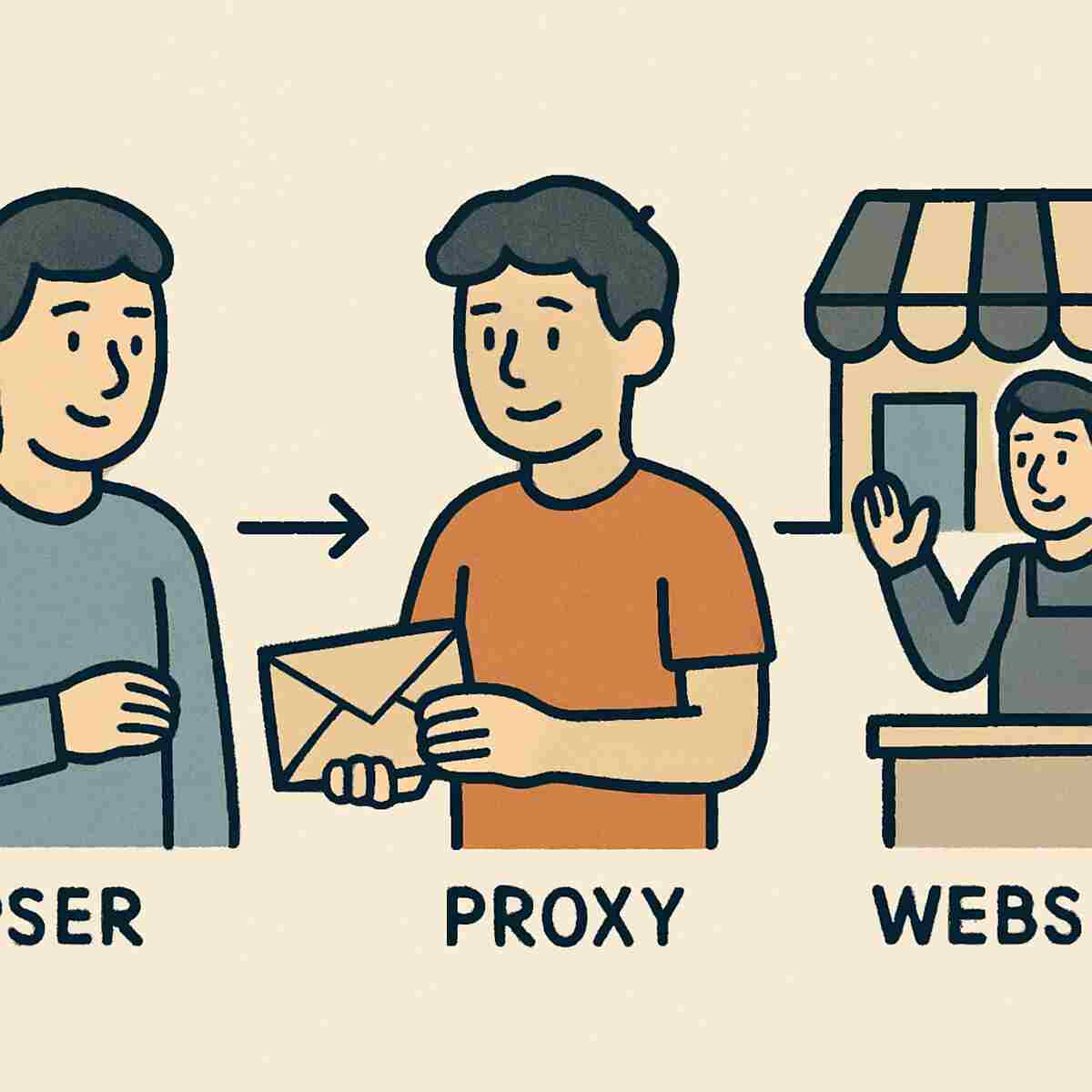
Proxy servers step in to help. Acting like a digital middleman, a proxy stands between you and the website, hiding your real location behind a completely different address so the site never knows who is really knocking at the door.
While a standard proxy offers a single disguise, sophisticated tools take anonymous browsing a step further by automatically switching that mask every few minutes. By constantly rotating your identity, you become impossible to pin down, ensuring you look like a brand-new visitor every time you load a page.
Most data services charge based on usage, similar to a strict cell phone data plan. Unlimited bandwidth rotating proxies allow you to browse without watching a meter, giving you the power to access the internet without filters or hidden costs.
Meet the Digital Middleman: Your First Step to Privacy
When you visit a website, your computer normally shakes hands directly with that site’s server. It is like walking into a store with your ID card pinned to your shirt; the store owner knows exactly who you are and where you came from because your digital address is on full display.
This direct connection is convenient for casual use, but it leaves a trail. To protect your privacy or access data without restrictions, you need a buffer between you and the open internet.
Instead of asking a website for information directly, you ask the proxy to get it for you. The proxy retrieves the webpage or data and hands it back to you. Imagine sending a letter to a company but strictly through a friend. Your friend puts the letter in a new envelope with their return address and mails it. The company sees your friend’s location, not yours.
In the digital world, the website sees the proxy’s details while your real digital identity remains safely hidden, allowing for true anonymous browsing.
Using a single middleman works for basic privacy, but sophisticated websites eventually catch on if the requests always come from the same source. To truly blend in and avoid detection, you often need more than just one mask.
The Secret to Never Getting Blocked: Automatic Identity Switching
Even with a middleman, problems arise if you ask for too much information too quickly. Websites eventually lock the deadbolt if they see the same specific digital address repeatedly. This is where a single, unchanging connection—often called a static proxy—falls short for heavy tasks like price comparison or market research.
To stay invisible, you must change your disguise constantly, using rotating proxies. Instead of relying on just one intermediary, you utilize thousands. Every time you request a website, a completely different address delivers it, making it impossible for the site to link the activity back to a single source.
Modern tools handle this switching instantly in the background. You don’t need to manually change settings every few seconds. The technology assigns a fresh digital identity for every new webpage you visit.
Distinguishing between sticking with one identity and switching them up is crucial:
- Static (Same Mask): Best for managing a single social media profile where you need to stay logged in.
- Rotating (Changing Masks): Essential for gathering data or checking flight prices, as you appear as a brand-new visitor every single time.
By using a rotating network of proxy servers, you eliminate the risk of getting banned for being “too active.” It creates a smooth experience where websites treat you like a regular, first-time guest, regardless of your browsing volume.
The All-You-Can-Eat Internet: Why Unlimited Data Matters
Once you have your disguises ready, the next constraint is usually data cost. Most proxy services operate like a strict mobile phone data plan. Every picture, video, or webpage you load counts against a limit, and costs can pile up quickly.
Standard “metered” data plans are like ordering food at a restaurant where you pay for every single grape. You constantly calculate the bill, afraid to explore the menu freely.
![A split-screen illustration showing two diners: on the left, a person at a festive all-you-can-eat buffet piling a plate high with food (representing unlimited data); on the right, a nervous person paying a waiter for a single grape on a plate (representing metered data).]
In contrast, unlimited bandwidth rotating proxies function like an all-you-can-eat buffet. You pay one flat fee, and then you are free to consume as much as you want without a meter running in the background.
This freedom is essential because modern websites are heavy. High-resolution images and autoplaying videos consume massive amounts of data. Comparing prices across hundreds of sites on a metered plan would drain your budget rapidly. Unmetered residential proxy networks provide predictability, allowing you to run research tools freely without the anxiety of watching a usage counter.
With the data limit removed, your choice involves the specific type of digital address you present to the world.
Home-Style vs. Office-Style Shields: Picking the Right Protection
When masking your identity, you generally have two choices: look like a regular person browsing from home, or look like a machine connecting from a server warehouse. These are Residential and Datacenter proxy servers.
Residential proxies (“Home-style”) use real digital addresses assigned to actual houses by internet service providers. When a website sees this connection, it assumes you are a normal neighbor checking the news or shopping. Because you look like a genuine human user, websites rarely block you, making this the stealthiest option.
Datacenter proxies (“Office-style”) come from large cloud server facilities. They are incredibly fast and usually cost less, but they lack the “human” camouflage. Sophisticated websites can easily spot that traffic is coming from a server farm, increasing the chance of access denial.
Consider which trait matters most to your goals:
- Home-Style (Residential): High trust and very hard to detect. Best for strict websites like ticket vendors or social media.
- Office-Style (Datacenter): Blazing speed and lower cost. Great for simple tasks, but easier to identify and block.
For reliable privacy or access to location-specific deals, rotating proxies from residential sources typically offer the smoothest experience. The slight difference in speed is worth avoiding constant security checks or CAPTCHA puzzles.
How to Stop the “Bouncer” From Kicking You Out
Websites monitor how fast you act to separate actual humans from automated programs. If you refresh a webpage repeatedly during a sale, you might see an error message. The site’s security system acts like a nightclub bouncer; if you try to run inside ten times in a minute, you get blocked.
This internet protection is rate limiting. Once you cross the invisible line of “too fast,” the site flags your digital address and locks you out.
Escaping this trap requires changing your appearance faster than the bouncer can track. Rotating proxies solve the problem by automatically switching your identification every time you click a link. Instead of seeing one person knocking repeatedly, the website sees a line of distinct, calm visitors. Proxy servers facilitate this illusion by presenting a fresh ID card for every single interaction.
Maintaining this constant rotation is the only reliable method for preventing IP bans during web scraping or heavy price comparison research, ensuring your work continues without triggering security alarms.
Gathering Facts Without Getting Noticed: The Power of Data Extraction
Manual research—opening dozens of tabs to compare prices—is slow. Automated software reads thousands of pages in the time it takes to click one link, allowing businesses to monitor markets instantly.
However, speed creates friction. Internet providers and websites often slow down connections that consume too much data too quickly. Overcoming bandwidth throttling is essential to keep information flowing smoothly.
Building a large scale web crawling infrastructure simply means having a system robust enough to ask thousands of questions at once without getting overwhelmed. The goal is to distribute the workload so no single connection bears too much weight.
Rotating proxies serve as the masking tape holding this operation together. By constantly swapping your digital identity, they allow you to gather public data at high volumes while appearing to be a crowd of regular visitors.
One Door, Many Rooms: The Magic of Backconnect Servers
Manually updating settings for thousands of rotating proxies would be impossible. A backconnect proxy server acts as a central hub that does this heavy lifting. Instead of juggling a list of addresses, you connect your computer to one permanent “gateway” address.
Think of it like a taxi dispatch service. You dial one number (the gateway), but a different car (the IP address) picks you up each time. You do not need the personal number of every driver.
- The Request: You send a command to the main gateway server.
- The Switch: The server instantly selects a fresh, random IP address from its pool.
- The Delivery: The website receives the request from that new address, unaware of your central hub.
This single-point design solves the complex problem of how to set up automatic IP rotation. Because the switching happens behind the scenes, your software thinks it is talking to one constant server. If a specific IP is slow or blocked, the system automatically routes you through a different one, ensuring stability.
Keeping Your Place in Line: Managing Sessions While Rotating
Constant rotation has a downside: some tasks require you to look like the same visitor for more than a split second, such as logging into an account or completing a purchase. If your identity changes mid-checkout, the website may assume a security breach and cancel the transaction.
To solve this, providers offer session persistence, or “Sticky Sessions.” Instead of switching your mask for every request, the server holds onto one specific digital address for a set period (usually 1-30 minutes). This allows you to complete complex actions like filling out shipping information.
Think of this like a parking meter. You “rent” a specific IP address for a guaranteed window of time. Once the timer expires, the system releases that address and moves you to a fresh one.
Most modern proxy servers provide a simple toggle for this. You choose a “sticky” gateway when your task involves a shopping cart or login screen, putting you in control of exactly how often your digital appearance shifts.
Shopping Like a Local: Seeing Global Prices from Home
Websites often use geo-targeting to show different prices based on your location. A visitor from New York might see a higher price than a visitor from a rural area. Your standard internet connection ties you to your physical location, making these variations invisible.
By using rotating proxies with location controls, you can virtually teleport. Route your traffic through a proxy server in Paris, Tokyo, or Buenos Aires, and to the website, you look exactly like a resident.
Geo-targeted IP rotation lets you see the internet without biased filters. This offers distinct benefits:
- Unlocking Regional Deals: Find software or flights priced lower in other countries.
- Verifying Ad Campaigns: Ensure advertisements appear correctly in foreign markets.
- Bypassing Digital Borders: Access content restricted to specific regions.
Saying Goodbye to Slow Loading: Overcoming Bandwidth Throttling
Even with a fast ISP, specific activities can feel sluggish due to throttling. Providers monitor traffic types and may artificially restrict speeds if they detect heavy usage, like massive downloads or rapid page refreshes.
Proxy servers act as a secure tunnel. Your ISP sees you are using data, but cannot easily distinguish what you are doing. Because they can’t identify a large download versus simple email traffic, they are less likely to restrict your speed.
This creates the environment for high-speed anonymous browsing. Instead of hitting a “soft cap,” you operate with consistent speed because your traffic remains unclassified. This is critical for tasks like real-time price tracking, where a lagging connection could mean missing a deal.
Doing Ten Things at Once: Handling Concurrent Tasks
Relying on a single connection is like moving a house with a sports car—fast, but you can only carry one item at a time. Concurrent connections in proxy pools allow you to hire a fleet of trucks instead.
Rather than loading one webpage after another, you can open fifty or a hundred pages simultaneously. Proxy servers assign a different digital identity to each “lane,” allowing all tasks to complete instantly without the website flagging you as a robot.
Operating at this volume requires unlimited bandwidth, rotating proxies to avoid exorbitant costs. You can run as many parallel lanes as your hardware handles without fear of the meter.
Consider this checklist to see if you need this power:
- Volume: Do you check prices on more than 50 product pages daily?
- Urgency: Are you monitoring tickets that sell out in seconds?
- Time: Does your research take more than an hour manually?
Splitting the workload turns hours of work into minutes.
Why Most People Overpay for Data and How You Can Save
Modern webpages are heavy with high-resolution media and tracking scripts that consume megabytes silently. Traditional data plans operate like a taxi meter, charging for every mile. This creates “data anxiety,” where every click has a price tag.
Switching to a flat-fee model is one of the best alternatives to metered proxy plans. You pay a single monthly price regardless of whether you visit one hundred websites or one million. This provides financial predictability, essential for scaling operations.
Using proxies without data caps allows you to break even quickly. Once your research requires significant data, a flat-fee plan becomes cheaper than paying for usage. You stop being penalized for working harder.
Unlimited bandwidth rotating proxies give you the freedom to scour the internet without boundaries, checking competitor prices every minute without fearing an unexpected invoice.
Flipping the Switch: How to Turn on Automatic Rotation
Accessing this unblocked internet does not require rewriting code. The process is similar to logging into email. Your provider issues digital keys—usually a username and password—which act as your VIP pass.
Entering these details into your browser or software completes the handshake. The final piece is the “gateway” address (a URL and port number), which tells your computer where to send requests.
Modern systems handle the swapping process in the background. While browsing manually is useful for spot-checks, the true efficiency comes from configuring rotating proxy servers for bots. These automation tools use the same login details to perform thousands of repetitive tasks without getting tired.
Training Your First “Digital Assistant”: Proxies for Bots
In this context, a “bot” is simply a digital assistant—a tireless intern that checks prices or updates faster than a human. However, if your assistant visits a website fifty times in a minute, security systems will block the connection.
Proxy servers are essential survival gear here. By routing the bot’s traffic through a proxy, you act as a buffer. Configuring rotating proxy servers for bots allows the software to automatically switch identities for every task. The website sees a crowd of different visitors rather than one hyper-active user.
Common uses include:
- Restock Monitors: Refreshing shopping pages for sold-out items.
- Travel Trackers: Scanning airline sites for price drops.
- Social Managers: Automating posts across time zones.
Private Browsing That Doesn’t Feel Like 1995
Privacy tools historically had a reputation for slowing internet speeds. This latency occurred because routing traffic through a middleman added physical distance to the data’s journey.
Modern technology has largely solved this. Providers now facilitate high-speed anonymous browsing by automatically picking a digital “mask” physically closer to the data you need. Unlimited bandwidth rotating proxies help by removing artificial speed limits; when a provider doesn’t have to count every megabyte, they have no reason to throttle connection speeds.
A service with millions of IP addresses ensures that if one connection lags, the system instantly swaps you to a faster line without a stutter.
Why Metered Plans are the “Hidden Tax” of the Internet
“Data anxiety” forces you to make micro-calculations about whether a website visit is worth the cost. On a metered connection, you are effectively charged for every digital advertisement a site forces onto your screen.
Unmetered options operate like a home internet connection: a flat monthly fee removes the hesitation from clicking a link. Small business owners realize why use proxies without data caps is the only sustainable strategy. If you compare prices across fifty stores, you shouldn’t stop halfway because of a data limit.
Combining unmetered bandwidth with rotating proxies allows you to be both invisible and unrestricted. You can change your digital identity thousands of times daily while consuming massive amounts of data. The system handles the switching; the flat-rate billing handles the volume.
Building Your Own Data Library: Scaling Up Your Research
Scaling research means going from checking one website manually to checking hundreds automatically. Instead of visiting a competitor’s page every morning, you set up a system to do it for you.
Sustaining this growth requires a fuel source that won’t run out. Unlimited bandwidth rotating proxies ensure your research engine runs at full speed without generating a surprise bill. Accessible proxy services allow a single laptop to perform the same depth of market analysis as a major corporation.
Nimble businesses use these tools to outmaneuver competitors by:
- Price Intelligence: Tracking discounts to adjust pricing instantly.
- Stock Monitoring: Predicting market shortages.
- Ad Verification: ensuring marketing campaigns appear correctly.
- Review Aggregation: Spotting trends in customer feedback.
The Ethical Way to Use Your New Digital Superpowers
Accessing the internet through proxy servers is a legitimate way to protect privacy and gather business intelligence, provided you focus on public data. Ethical data gathering involves looking at information available to anyone without a password, such as prices or news.
It does not mean bypassing login screens or accessing personal accounts. Even when browsing public pages, good digital citizenship matters. Professional tools often include settings to space out requests, ensuring your anonymous browsing remains invisible without becoming a nuisance to the website owner.
Avoid “free” proxy lists found on forums; these are often traps. Genuine privacy requires a trusted provider. Using rotating proxies acts as a shield, not a weapon. When used correctly, these tools level the playing field, allowing small businesses to compete fairly.
Your Roadmap to Unlimited Internet Freedom
You have moved from being an open book to becoming invisible on demand. The frustrations of access blocks and price jumping are problems you now have the power to solve.
Your Start Guide:
- Define your goal: Are you browsing privately, researching markets, or comparing prices?
- Select a provider: Choose a service offering unlimited bandwidth rotating proxies to eliminate hidden fees.
- Connect: Enter the provided credentials into your browser or automation tool.
Focus on simplicity and transparency when choosing a partner. You want a service that handles the technical heavy lifting, leaving you with a seamless, unmetered connection. The web feels different when you control your own digital footprint—you are no longer just a visitor, but a user exploring on your own terms.